| |
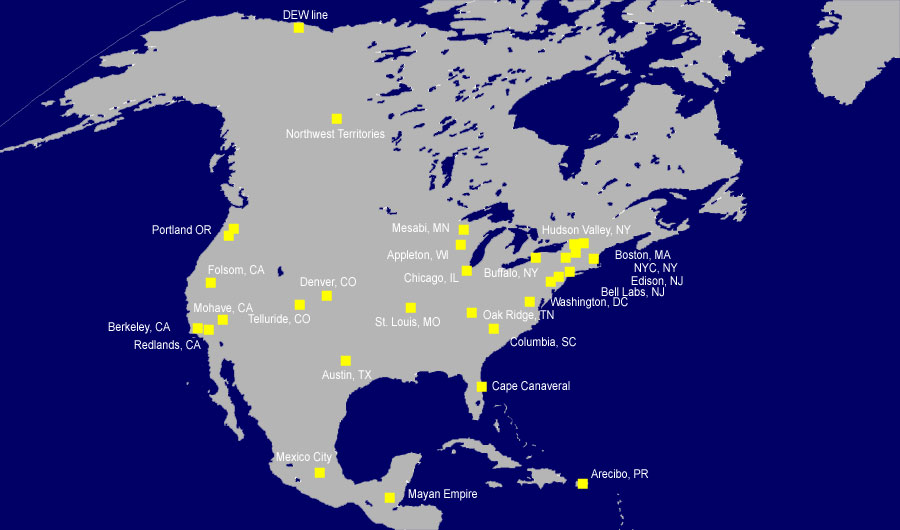
1879:
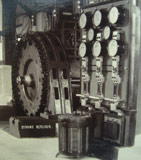
Dolgeville Dynamo
This power station built at the Dolgeville
Mill in Dolgeville, NY supplied power for industrial purposes.
|
| |
1881:
Niagara Falls, New York -A small dynamo supplied
a few stores in in Niagara Falls with power for lighting.
AC power came to this area 14 years later.
|
| |
1882:
Appleton Wisconsin, US DC power, 12.5 kW. This was the first Edison
hydroelectric station. It powered Van Depoele's early electric
trolleys later in 1886.
|
| |
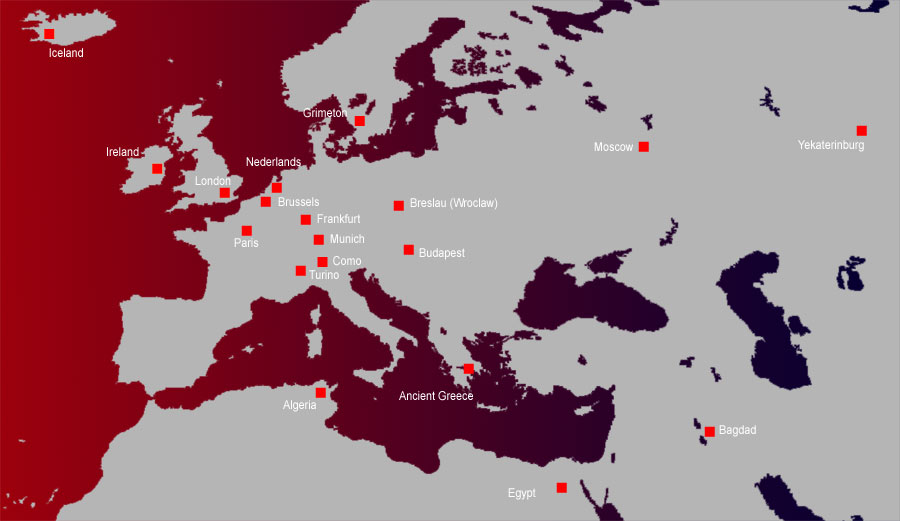
1882:
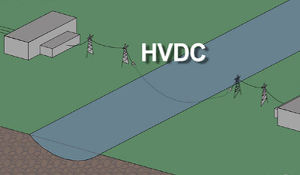
Miesbach to Munich, Germany- longest DC transmission to
this date: 1400
volts 57 km distance built by Marcel Deprez.
HVDC
Transmission
length: 57 km (37 miles)
|
|
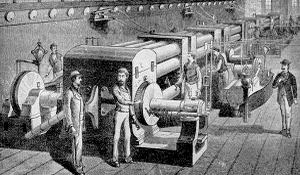
1882:
New York City-
Edison Illuminating Company builds New York's first power plant at the Pearl Street
Station. The DC station lit up to 400 lights and served 85 customers at first. The
plant grew consistently over the next few years.
Transmission
length: several blocks downtown
|
| |
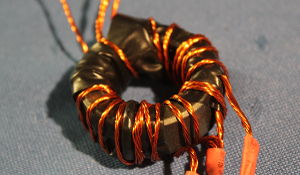
1884: England -
Gaulard and Gibbs build an AC power plant using a rudimentary transformer
which allows for voltage to stay constant despite additional
lights(load) being added.
Transmission
length: unknown
|
| |
1884:
Lanzo Torinese to Turino, Italy- 2000 volt
experimental transmission line built for the International
Electricity Exhibition. This transmission line uses a Gaulard and Gibbs transformer.
Transmission
length: 40 km (25 miles)
|
|
|
1886:
Great Barrington, Massachusetts The first
full feature AC power distribution system using transformers is
built in the small city of Great Barrington. It used a Siemens
generator and Edison's incandescent lights. 500 volts.
Transmission
length: 4000 ft (1.2 km)
|
|
|
1886:
Pittsburgh, PA
Oliver Shallenberger, the main engineer of AC power technology at Westinghouse constructs
an AC system for Union Switch and Signal Company Works. George Westinghouse was pleased and began
to sell this system. It operated at 1000 volts.
Transmission
length 3 miles
|
|
|
1887:
Buffalo, NY
Oliver Shallenberger and William Stanley build the first commercial AC power plant for Westinghouse
for Buffalo Electric Company. Single phase. Voltage ?.
Transmission
length unknown
|
|
|
1887:
Greater London
Sebastian de Ferranti builds the largest AC power station to date (10,000 Volts). After business
and other problems the Deptford Power Station is forced to delay opening until 1891.
The station eventually supplies
central London.
Transmission
length unknown
|
|
|
1889:
Oregon City Falls, Oregon, USA Longest
DC transmission of power in North America is established south
of Portland at Station A.
Transmission
length 14 miles (DC
Power)
|
|
|
1890:
Oregon City Falls, Oregon, USA
Experimental,
2 phase AC generators installed by Westinghouse at
Powerhouse A, it sent power to Portland. It was 5 years later
before regular commercial AC power was established in Powerhouse
B.
Transmission
length 14 miles (AC power)
|
|
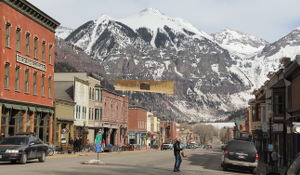
1891:
Telluride Colorado- Ames Hydroelectric Plant:
3000V, 133 Hz, single phase. It sent power to mining operations
in the mountains near Telluride. It was a Westinghouse experimental
project.
Transmission length: 2.5 miles
|
|
|
1891:
Lauffen-Frankfurt Germany - A
MAJOR STEP FORWARD: The first long-distance and
3-phase alternating current demonstration. This proved that
three phase power worked the best for a power grid. This project
was developed by Oskar von Miller and engineered by the founder
of 3 phase AC power Mikhail Dolivo-Dobrovolsky.
Transmission length 175 km (109 miles)
|
|
|
1893:
Redlands Mill Creek 1 powerhouse Redlands,
CA 1893
The first 3-phase AC commercial power plant in the world.
This used C.P.
Steinmetz's improved 3-phase system.
Transmission
line length: 7 miles
|
| |
1893:
Hellsjon - Grangesberg, Sweden: developed
by Ernst Danielson, he also was involved in the Mill Creek
Plant at Redlands, California in the same year. General Electric Company.
Transmission
line length: 10 km
|
| |
1895:
Pelzer Hydroelectric Plant, South Carolina This
plant provided AC 3-phase power to the Pelzer Manufacturing
Plant. 3300 V (no transformers were used on transmission)
Transmission line length: 2.75 miles
|
|
|
1895:
Folsom Powerhouse, Folsom California Built
near a reservoir that catches water from the Sierra Nevada
outside of Sacramento.
Transmission line length: 22 miles
*The Folsom Prison opened a small AC powerhouse in 1893
as part of the same hydro system
|
|
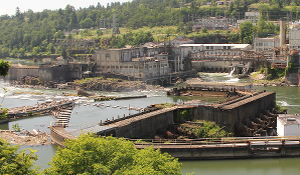
1895:
Oregon City Falls, Oregon, USA.
Powerhouse B is built on the Willamette River and supplies
commercial AC power to Portland 14 miles away.
Transmission
line length: 14 miles
|
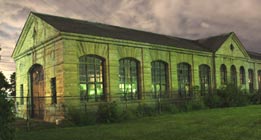 |
1895: Niagara
Falls AC Power Plants Westinghouse won the
contract to build this power plant. GE won the contract for
power transmission to Buffalo. The opening of the power plants
was trumpeted in the international press more than any other
hydro plant before, or possibly since. For this reason it
is mistakenly believed to be the first. Nonetheless it was
the largest hydro power plant till that date.
Transmission line length: 25 miles
(1896)
|
|
|
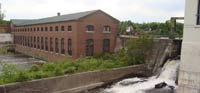
1897:
Mechanicville Power Station, Mechanicville,
New York
This
power station was built as an experiment of C.P. Steinmetz
and commercial operation.
Transmission line length: 17
miles
-
Also the site of Albert W. Hull's HVDC experiments in 1932
read more
about it.
|
|
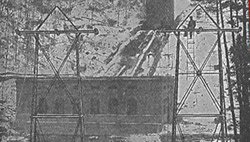
1908: Schaghticoke
Power Station Schaghticoke, NY
Site
of an experimental monocyclic power transmission 1908. This
was a project by AC Pioneer
Charles.
P. Steinmetz.
Various power stations like
this became testing grounds for new transmission technologies.
|
|
|
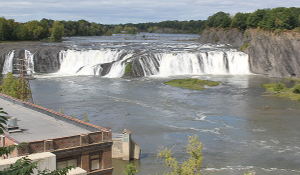
1915: Cohoes Power Plant
Cohoes, NY
This plant was a part of the wide scale electric power development going on
across the US and Europe at the time. The power grid begins to form
as clusters of powerplants begin to interconnect.
|
|
|
After
1900 the number of power stations exploded. All across the
world from Argentina to Singapore AC 3 phase power became
established as the best way to supply populations with electric
power.
|